A thread or a cliffhanger?
How do you fall in love with a series?
The best series don't just tell connected stories—they make you fall in love with a world you never want to leave. But what creates that irresistible pull that keeps you reaching for the next book?
Sometimes it's a cliffhanger. The villain escapes at the last moment, lovers are torn apart, or a shocking revelation changes everything you thought you knew. You're left hanging, desperate for answers.
Other times, it's what I call the thread—a continuous element that weaves through each complete story. Think about Harry Potter: each book wraps up its own adventure, but you know there's another year at Hogwarts waiting, with new magical challenges and deeper mysteries about Harry's destiny. The same happens in Rebecca Yarrow's romantasy novels, where the academic setting promises fresh romantic entanglements and magical discoveries with each semester.
But what about series that don't have that built-in structure? What makes you fall for characters so deeply that you need to follow them into their next adventure? I believe it happens when you come to genuinely care about these fictional people—when their struggles feel real, their growth matters to you, and you find yourself wondering what they'll face next.

Take Steve Levitan from my golden retriever mysteries. In In Dog We Trust, you meet him returning to his hometown with his metaphorical tail between his legs after a stint in prison for computer hacking. By the book's end, you're invested in whether he'll successfully rebuild his life—or whether his parole officer will discover he's still hacking, even if it's to solve his neighbor's murder or help a family friend recover stolen money.
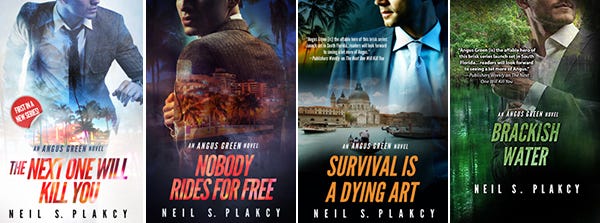
Or consider Angus Green in The Next One Will Kill You. He starts as a novice FBI agent in Miami, and by the final page, he's learned hard lessons and been shot in the line of duty. If you care about Angus, you want to see how he'll grow and survive in this dangerous career.
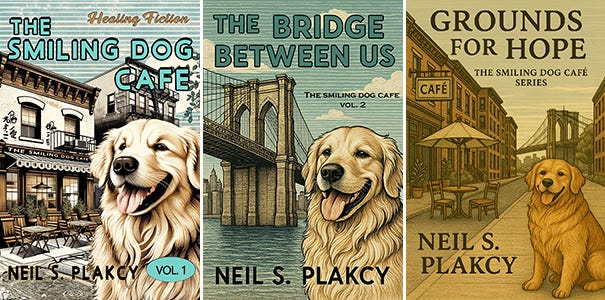
I've taken a different approach in The Smiling Dog Café. For me, those stories are all about how I make readers feel. I want to evoke an emotional response, maybe even tears. (I cry a bit sometimes as I write.) I want readers who like an emotional connection to keep reading about different characters with different situations, all drawn by the healing power of the dogs and Betty's coffee.
In my reading of Japanese-style healing fiction, I've learned that the power of community is important. I wanted to highlight that in Grounds for Hope, the first novella in the new book. Miguel's parents brought him on a dangerous journey from Honduras in order to find safety, but after his mother's death, his father is deported, and Miguel is left alone and homeless at sixteen. Just as in the African proverb about how it takes a village to raise a child, here it takes a community to help him find a new home and the courage to move on.
The second novella, Finding Grace, takes a similar approach. Tanya is a teenager whose mother has decamped to Nepal to find herself. Tanya needs the community of the café to help her deal with that loss, and grow into her true self.
What makes you want to keep reading an author's work after you finish a book? Do you need to know how a plot element will resolve? Do you want that same feeling of watching a romance evolve? Or do you want to see how characters continue to grow in the face of new challenges?
Grounds for Hope is available for pre-order from Amazon, with a release date of August 6, to give my fantastic beta readers enough time to find any errors I need to correct.


No comments:
Post a Comment